(this article is written in French)
Article available in Les Echos - By Adrien Lelièvre (read here)
Based at Station F, the startup is developing a foundation model designed to unlock the value of structured, tabular data. It has raised $4 million to accelerate its R&D efforts.
Within the AI ecosystem, startups building foundation models trained on text — large language models — have made a spectacular breakthrough since 2022. The latest example is DeepSeek, a Chinese startup that recently sent shockwaves through OpenAI, Anthropic, and Mistral AI.
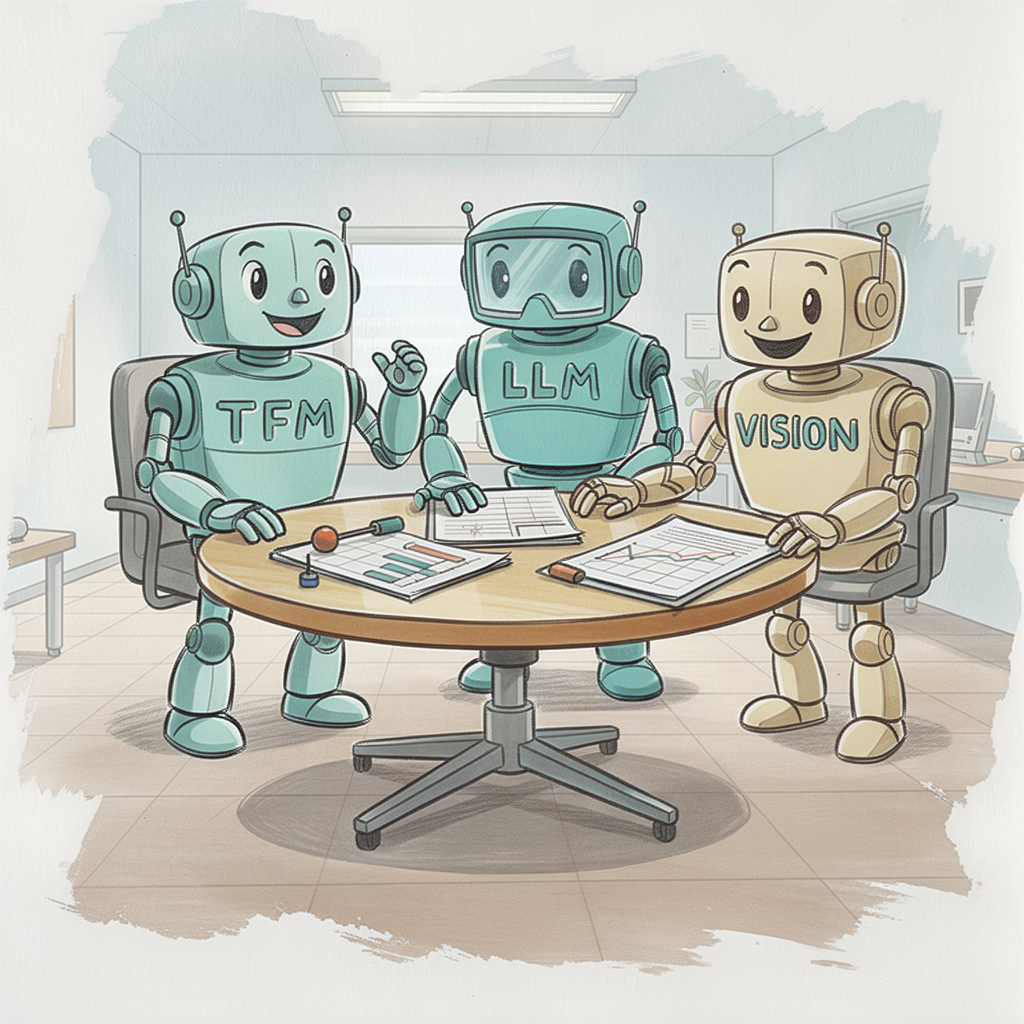
But in parallel, another technology is quietly emerging: tabular foundation models. The term refers to AI systems designed to operate on structured data tables. France’s early pioneer in this space is Neuralk-AI, a deeptech startup that has raised $4 million from Fly Ventures, StemAI, and a group of well-known business angels, including Thomas Wolf, Charles Gorintin, Julien Launay, and Jean-Louis Quéguiner.
Tabular data is inherently more difficult to exploit, as it requires models capable of understanding relationships between rows, columns, headers, and cell values. In this area, large language models offer limited usefulness.
Unlocking underexploited data
“Different algorithms are needed for tabular data. But if you make real progress there, you can solve a wide range of problems,” explains Mehdi Ghissassi, Chief Product Officer at AI71, an AI research center based in Abu Dhabi.
Neuralk-AI’s promise lies in leveraging data that has so far been underutilized — and using it for predictive purposes. The startup is initially targeting the retail sector, with applications ranging from assortment optimization and customer personalization to product catalog cleaning and enrichment, as well as logistics optimization.
“We’ve identified around 45 use cases,” says Antoine Moissenot, who co-founded the company with Alexandre Pasquiou, the author of a PhD in computational neuroscience at Inria. Neuralk-AI is still in the R&D phase, but ultimately plans to make its solution available to companies via an API.
“The API isn’t open yet. For now, we’re focused on working with early testing partners,” Moissenot adds. “Today, we’re collaborating with four or five major retail players.” These include E.Leclerc, Auchan, and Mirakl — whose CEO and CTO are also investors in the company. “With Mirakl, we’re running tests to eliminate duplicate entries in product catalogs,” he notes.
A competitive landscape taking shape
In recent months, scientific papers on tabular foundation models have appeared in leading journals such as Nature and on arXiv. “This is going to be a hot research topic in the coming years,” predicts Gaël Varoquaux, a researcher at Inria and a specialist in the field.
According to our information, a startup has already emerged in Germany and another in the United States — the latter including French scientists — though neither has yet publicly disclosed details of its activities. Neuralk-AI aims to move into the spotlight ahead of them and hopes to gain visibility before the AI Summit in Paris, scheduled for February 10–11, 2025.
“More and more people are paying attention to this area because of its potential impact. But it’s extremely challenging,” cautions Mehdi Ghissassi. Then again, large language models were once considered equally difficult — until OpenAI stunned the industry with ChatGPT and triggered a global AI arms race.