
Predictive AI starts with getting your tabular data ready.
Neuralk’s Agent works with you to frame your problem, define a solution, and iterate over every step of your data workflow, under your control.
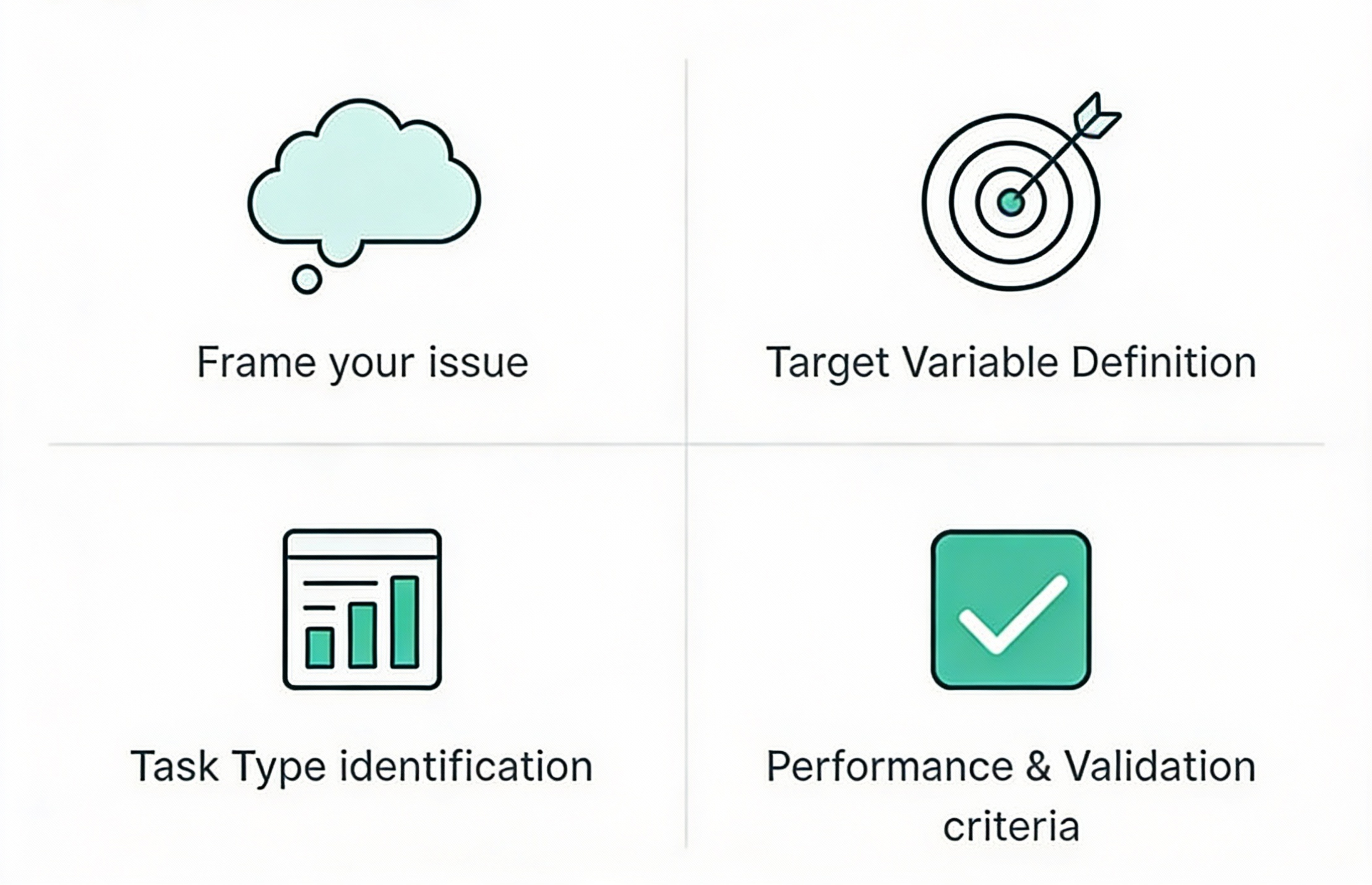
Problem Framing: Describe your challenge to the Neuralk DS Agent; it will analyze your input data, align on WHY the problem exists before touching modeling choices. This is a human-agent discussion loop.
Target Variable Definition: Make the prediction task explicit and testable. Force explicitness so an agent can reproduce it.
Task Type identification: Classify the ML problem without oversimplifying. Use intent + target definition, not just data types.
Performance & Validation criteria: Define what 'good' means BEFORE modeling. Establish metrics and acceptance criteria.
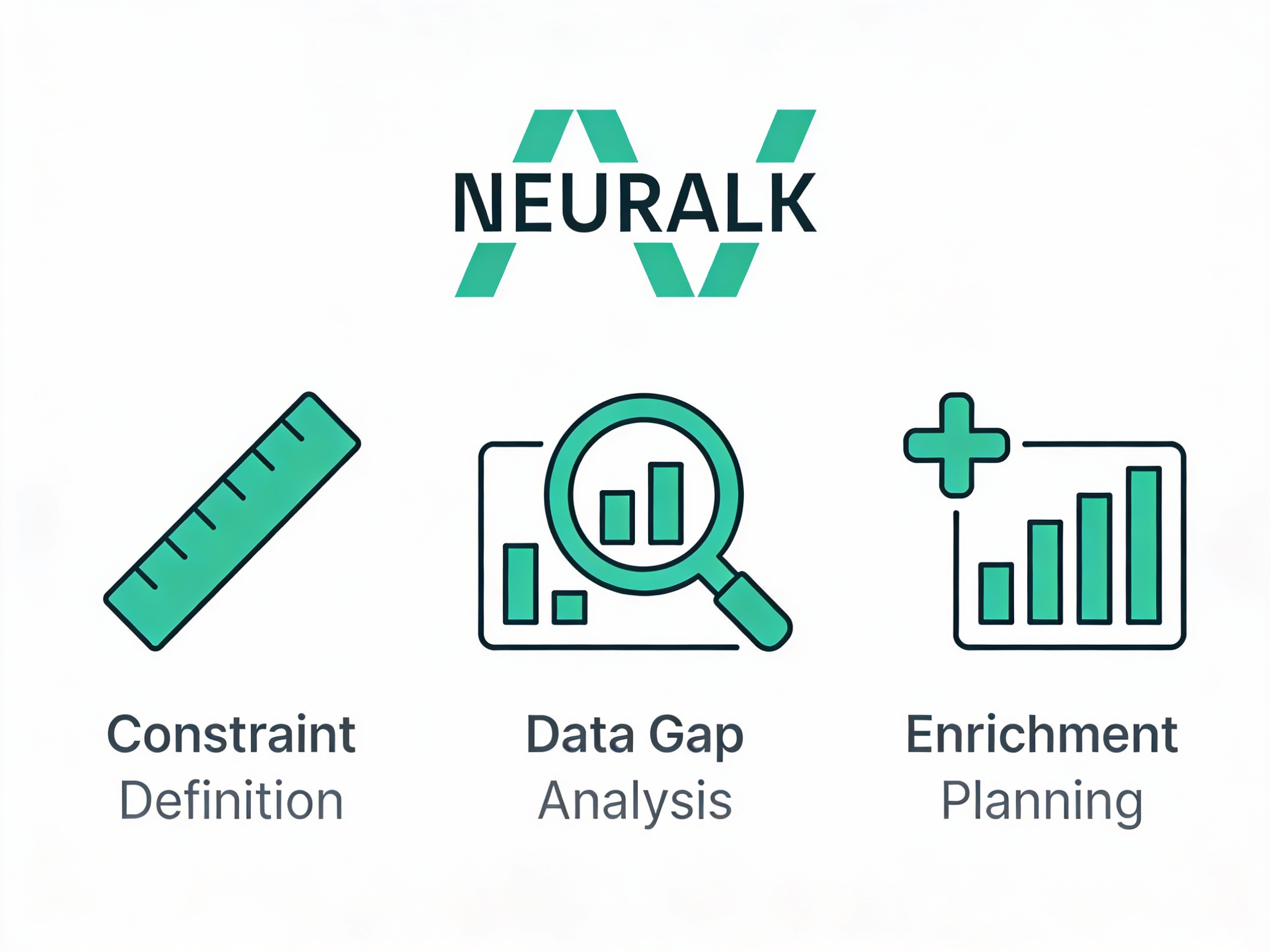
Constraint Definition: Prevent infeasible or irrelevant solutions by defining explicit constraints.
Data Gap Analysis: Identify what's missing or problematic in the data relative to the problem definition.
Recommend strategies to fill identified data gaps.
Enrichment Planning: Recommend strategies to fill identified data gaps
Assess whether each variable behaves like a real, usable measurement
Determine why values are missing and what that means for modeling
Classify features by their true semantic nature, not just data type.
Identify features that would not be available at prediction time or that derive from the target.
Assess whether the data is consistent across different segments or groups.
Understand how features relate to the target and identify modeling hints.
Consolidate all EDA findings into machine-usable metadata and human-readable narrative.
Compute metrics and compare to baselines.
Validate results against EDA expectations - check if performance makes sense.
Break down performance across folds, segments, time and classes.
Identify where and how the model fails.
Understand why the model make its predictions.
Connect errors to causes and prioritize fixes.

.png)


Unlocking Predictive AI for your structured data